The following categories of people should avoid giving blood:
- Pregnant or lactating women, or those who have recently had an abortion.
- Persons who are on steroids, hormonal supplements or certain specified medication
- Persons with multiple sexual partners or those who are addicted to drugs
- Persons who have had an attack of infection like jaundice, rubella, typhoid or...
Full Answer
What are the reasons deny you from donating blood?
Jan 14, 2022 · You CAN’T donate blood if you take the following medications: Blood thinners Acne and psoriasis medications. Prostate and hair loss medications. You CAN donate blood if you take the following medications: Aspirin. Oral contraceptives. Blood pressure medications. Insulin Never stop medications prescribed by your healthcare provider in order to donate blood.
What are the reasons why a person cannot donate blood?
You should not give blood if you have AIDS or have ever had a positive HIV test, or if you have done something that puts you at risk for becoming infected with HIV. You are at risk for getting infected if you: have used needles to take any drugs, steroids, or anything not prescribed by your doctor in the last 3 months
What conditions disqualify you from donating blood?
Jun 10, 2020 · You should not donate blood if: You are feeling unwell; You are anaemic; You are pregnant, have been pregnant within the last year or are breastfeeding; You have certain medical conditions, which might make you an unsuitable donor ; You are taking certain medications, such as antibiotics. You may be able to donate blood at a later time.
What makes you ineligible to give blood?
Anyone who has a congenital coagulation factor deficiency. Anyone who has had a positive test for HIV. Anyone who has engaged in sex for money or drugs in the past three months. Anyone who, in the past 12 months, has had close contact with — lived with or had sexual contact with — a person who has viral hepatitis.
See more
Safety of blood donation by individuals over age 70 and their contribution to the blood supply in five developed countries: a BEST Collaborative group study. Exclusion solely based on older age appears to be unwarranted based on safety concerns such as donor reactions. Healthy older individuals can continue to safely donate and make a significant contribution to the blood …
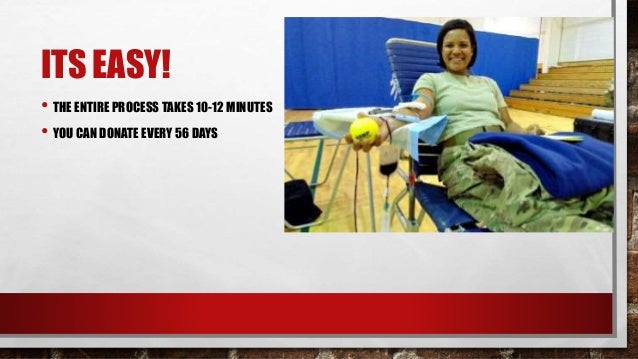
Who Cannot donate blood?
You are eligible to donate blood if you are in good health, weigh at least 110 pounds and are 17 years or older. You are not eligible to donate blood if you: Have ever used self-injected drugs (non-prescription) Had hepatitis.
Who Cannot donate blood plasma?
People who have a fever, productive cough, or are feeling generally unwell shouldn't donate. This also applies to people who are currently receiving antibiotics for active infections. Medical conditions. There are 23 conditions that the American Red Cross considers when screening blood donors.Sep 22, 2020
Why would a blood donor be rejected?
There are certain conditions that mean you may never be able to follow the dictates of your community conscience. A history of hepatitis, heart disease, cancer and bleeding disorders, convulsions or AIDS or being in an AIDS risk group will disqualify you.Dec 22, 1988
What should be avoided be for donating blood?
Before donating blood, try to avoid the following:Alcohol. Alcoholic beverages lead to dehydration. ... Fatty foods. Foods high in fat, such as french fries or ice cream, can affect the tests that are run on your blood. ... Iron blockers. Certain foods and beverages can affect your body's ability to absorb iron. ... Aspirin.
Why do they check your elbows when donating plasma?
Because arteries have higher blood pressure than veins, a puncture can lead to bleeding into the arm tissues around the puncture site. The signs of an arterial puncture include a faster blood flow and lighter-than-usual color of blood running through the tubes to the machine collecting your plasma.
What are the conditions for blood donation?
Eligibility RequirementsAge. Donor should be in the age group of 18 to 65 years. ... Weight. The Donor Should not be less than 45 Kilograms. ... Pulse. Temperature and Pulse of the donor shall be normal. ... Child Birth. ... Blood Pressure. ... Haemoglobin. ... Immunization & Vaccination. ... Malaria.More items...
Can diabetics donate blood?
People with type 1 and type 2 diabetes are eligible to give blood donations. You should have your condition under control and be in otherwise good health before you donate blood. Having your diabetes under control means that you maintain healthy blood sugar levels.
Is giving blood good for you?
Regular blood donation is linked to lower blood pressure and a lower risk for heart attacks. “It definitely helps to reduce cardiovascular risk factors,” says DeSimone.Jan 24, 2022
Can a person with tattoos donate blood?
Most people can donate blood immediately after getting inked, as long as the tattoo was applied at a state-regulated entity that uses sterile needles and ink that is not reused.Jul 19, 2021
Can I drink coffee before donating blood?
Donors should have a healthy meal and drink fluids within four hours before donating. It is best to avoid coffee and caffeinated beverages before donating.
Why should you avoid coffee before donating blood?
Avoid alcoholic and caffeinated beverages: We know a lot of people ask, “Can I drink coffee before donating blood?” While it won't directly affect the blood being donated, caffeinated beverages like coffee and tea can block the essential iron your blood absorbs. while alcohol can lead to dehydration.Jan 12, 2021
What happens to your body after you donate blood?
If you're a healthy adult, you can usually donate a pint (about half a liter) of blood without endangering your health. Within a few days of a blood donation, your body replaces the lost fluids. And after two weeks, your body replaces the lost red blood cells.Mar 4, 2021
Why should people donate blood?
Safe blood saves lives. Blood is needed by women with complications during pregnancy and childbirth, children with severe anaemia, often resulting...
What happens when I give blood?
Whether you are a first-time or regular donor, the blood service must make sure that you will come to no harm by donating blood. This includes chec...
How much blood will be taken? Will I have enough?
In most countries, the volume of blood taken is 450 millilitres, less than 10 per cent of your total blood volume (the average adult has 4.5 to 5 l...
Is giving blood safe?
Yes. Remember that you will only be accepted as a blood donor if you are fit and well. Your health and well-being are very important to the blood s...
Does it hurt?
Just squeeze the inside of your elbow tightly and you will get a quick idea of what the needle feels like. All you should feel is a gentle pressure...
Who can give blood, and how often?
The criteria for donor selection varies from country to country, but blood can be donated by most people who are healthy and do not have an infecti...
Who should not give blood?
The blood service is concerned with the welfare of both the blood donor and the recipient (patient). Donors are often asked not to donate blood fo...
Can I give blood after vaccination against SARS-CoV-2?
Consistent with current general global practice, recipients of SARS-CoV-2 vaccines that do not contain live virus may donate blood if they feel wel...
How will I feel after giving blood?
You should feel great for selflessly giving someone the gift of blood.
What is the age limit for blood donation?
There is no upper age limit for blood donation as long as you are well with no restrictions or limitations to your activities. In-Depth Discussion of Age and Blood Donation. Those younger than age 17 are almost always legal minors (not yet of the age of majority) who cannot give consent by themselves to donate blood.
How long do you have to wait to donate blood?
Wait at least 8 weeks between whole blood (standard) donations. Wait at least 7 days between platelet (pheresis) donations . Wait at least 16 weeks between Power Red (automated) donations. First-time male donors may be eligible to donate blood if they have not had sex with another man in more than 3 months.
How long after taking aspirin can you donate blood?
Aspirin. Aspirin, no waiting period for donating whole blood. However, you must wait 2 full days after taking aspirin or any medication containing aspirin before donating platelets by apheresis. For example, if you take aspirin products on Monday, the soonest you may donate platelets is Thursday.
How long after blood transfusion can you donate?
Blood Transfusion. Wait for 3 months after receiving a blood transfusion from another person in the United States. You may not donate if you received a blood transfusion since 1980 in France, Ireland, England, Wales, Scotland, Northern Ireland, Channel Islands, Isle of Man, Gibraltar or Falkland Islands.
Does the Red Cross accept hemochromatosis?
American Red Cross does not accept individuals with hemochromatosis as blood donors. Learn more about Hematocrit here. Hemoglobin, Hematocrit, Blood Count. In order to donate blood, a woman must have a hemoglobin level of at least 12.5 g/dL, and a man must have a hemoglobin level of at least 13.0 g/dL.
How to contact the Red Cross for blood donation?
Individuals with questions about their donation eligibility can contact the Red Cross Donor and Client Support Center at 1-866-236-3276. For the purposes of blood donation gender is self-identified and self-reported, which is relevant to the transgender community.
How is blood volume determined?
Blood volume is determined by body weight and height. Individuals with low blood volumes may not tolerate the removal of the required volume of blood given with whole blood donation. There is no upper weight limit as long as your weight is not higher than the weight limit of the donor bed/lounge you are using.
How many people can donate blood?
Red blood cell, plasma, and platelets all the components of blood are vital for a lifeline. But, are you aware that only one in thirty people can donate blood.
How long do you have to wait to donate blood after getting a tattoo?
If you get a tattoo done from such places you have to wait for 12 months before donating blood, else you might spread infection (2). Always discuss your situation with a healthcare professional. Also, if gone for certain cosmetic treatments which require piecing with needles you got to wait at least for 4 months.
How long after syphilis can you donate blood?
In some, despite getting the treatment, they need to be re-treated. If wanting to donate blood, you should wait for 12 months after getting fully treated.
How to make a blood donation appointment?
Blood donation appointments can be made by applying at redcrossblood.org or calling 1-800-RED CROSS (1-800-733 -2767). Blood donors need to be 17 or older and must have a blood donor card or driver’s license, or two other forms of identification.
How long do you have to wait to donate a tattoo?
If you’ve recently had a tattoo, piercing, semi-permanent make-up –any treatment that pierces the skin -- you will need to wait at least four months before being eligible to donate. The primary reason is to prevent transferring the hepatitis virus.
Why do people donate blood?
Donated blood helps meet many medical needs, including those of people who have lost blood due to trauma, an organ transplant or other major surgery. There is no substitute for human blood — all transfusions use blood from a donor. And the inventory of donated blood must be constantly replenished.
How long does it take to donate blood?
Whole blood donation takes about 45 to 60 minutes. Apheresis takes about 1 1/2 to two hours. Double red cell donation takes about 30 minutes longer than a whole blood donation. At Mayo Clinic donor centers, you'll have access to wireless internet, a television and movies during the donation process.
How long are platelets good for?
Platelets from a whole blood donation or apheresis are good for only five days. Red cells from a whole blood donation are good for 42 days under refrigeration.
How often can you donate plasma?
Plasma donors may donate as often as every 28 days. Platelet donors may donate as often as every eight days, and up to 24 times in a 12-month period. Double red cell donors may donate as often as every 168 days.
How long after a positive test can you donate blood?
The Food and Drug Administration suggests waiting to donate blood for at least 14 days after a positive diagnostic test for COVID-19 without symptoms or for at least 14 days after symptoms of COVID-19 have completely cleared up.
Can you faint after blood donation?
Staff members are skilled at making the experience as smooth as possible. It may help to not watch the needle as it is inserted, and you don't have to see the blood.

Popular Posts:
- 1. where to donate a car for charity
- 2. how to donate car in california
- 3. how to donate a car in pa
- 4. where donate blood
- 5. where can i donate my vehicle
- 6. where do i donate my car
- 7. what is the best charity to donate a car
- 8. where is the best place to donate a car
- 9. where to donate cars
- 10. where to donate my car for charity